
Geese ≠ Psyop
Geese are a group of Brooklyn prep school kids, but they are not an industry plant (and they don’t sound like one either).

I first heard Geese while deciding to see Vampire Weekend on the Only God Was Above Tour for the fourth time. It was this time last year, and the question of “Is it worth it?” came down to the opener. All I knew about Geese was that they are Brooklyn kids, and their lead singer, Cameron Winter, is the brain behind “Love Takes Miles.”
“2122” clicked immediately, as did the rest of 3D Country. “Gravity Blues” became my song of the summer, 2 years after its release. Winter’s fluctuating vocals forced me to buy a ticket — I was one of the few fans standing during their set. Half the set was Getting Killed material. I felt late to the party even though the party hadn’t even started.
During the summer of 2025, I forced Geese on everyone. Dad called them Phish, and Mom couldn’t manage Winter’s whine. Months later, they’re now devout Geese followers. For the most part, when I recommended Geese, they were unknown to the masses, but the consensus was that Geese are, simply put, good rock musicians. Quirky, jarring, and tasteful rock music is their DNA. A triad of flavors only fit for Geese.
That’s why the hype around Getting Killed was both a surprise and easy to shrug off. In the past few days, the “hype” has turned into industry plant and psyop allegations. Not a recent phenomenon for Geese — Winter’s dad is a composer, and the group attended Brooklyn Friends School (where the base tuition for a single year is $65,575). So, the group will fundamentally receive the mark of an industry plant by people too bored to actually listen. However, the psyop label isn’t about their background; it’s about their ties with social media agency Chaotic Good.
In a Substack post by artist and writer Eliza McLamb, Chaotic Good’s ties with Geese were revealed. Basically, Chaotic Good ran a marketing campaign for Getting Killed to boost engagement with the band and lead users to the record. Although Chaotic Good denies this, it is also possible that the company used AI bots to create Geese-related content and fan pages. The whole situation was blown out of proportion after Wired published an article that relatively labeled Geese as the bad guys.
Geese are not the good guys or the bad guys; they’re an inconceivably talented band that is doing what it takes to succeed financially in the music industry. While Chaotic Good is new to the industry, deceitful maneuvers by marketing companies are the industry standard. Wired and Geese-haters are using the band as a scapegoat for a long history of musicians making it easier on themselves. What Geese did isn’t unprofessional or shameful; it’s the music industry, and if anything, the only incompetent characters in the situation are people unable to adapt to the times.

I love Geese. Their live sets remind me why music conquers all, and choosing a favorite between 3D Country and Getting Killed will go down the same way that the “Jordan or Lebron” debate has. Falling for Geese pre-stardom allows me to appreciate the music without considering what the masses think. I don’t care if The Guardian calls them “the new saviors of rock ’n’ roll” or that Geese made Patti Smith feel optimistic — I only care that the music is good.
Chaotic Good may have aided Geese’s rise, but they had zero influence on their sound. Getting Killed is a reinvention of 21st-century rock, and when the music is that profound, people will care regardless of what social media says. As Geese drummer Max Bassin said after winning International Group Of The Year at The BRITs, “Go Geese!”
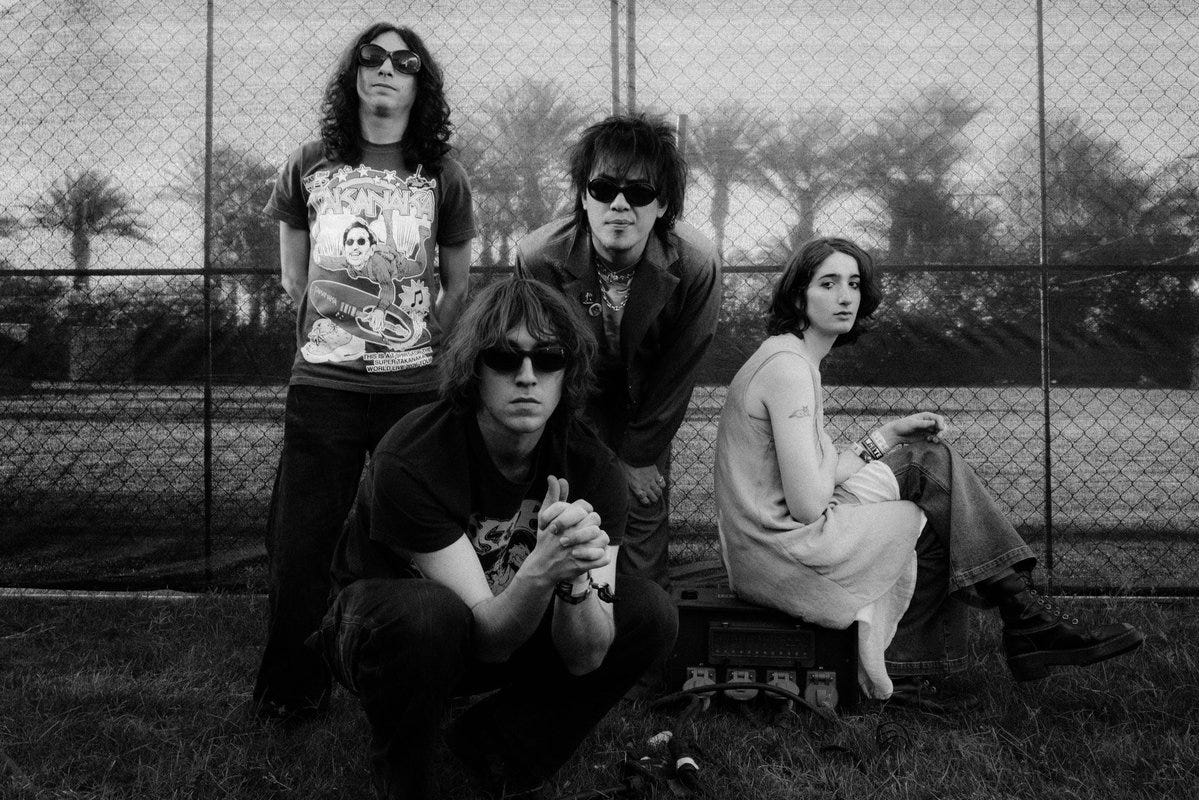
Exhibit A: "Chalk Dust Torture"
noice, I conquer